
Finding Randolph Residents
Randolph does not keep one complete public roll of everyone who lives in town. The strongest first step depends on the question. For a current civic address, ask the Town Clerk for the applicable street list or voter record. For ownership, start with the assessor. For a former household, look at deeds, printed directories, newspapers, and probate together. Each source answers a different question, and an owner, occupant, boarder, mailing addressee, and registered voter are not interchangeable labels.
Use a name exactly as known, then test spelling variants and a middle initial where records allow it. A returned name is a lead, not a conclusion. Compare the street, date, parcel, or family detail against another independent record before treating it as the same person. A local clerk can explain a record series, current form, access rule, or fee, but protected details are not a phone lookup.
- Request the relevant Randolph street list or local voter record when the aim is a current civic-residence lead.
- Search the assessor database by owner, location, or parcel to identify the property owner of record and the parcel context.
- Check the Norfolk Registry index for the owner, grantor, or grantee, then compare the recorded deed details.
- For an earlier household, use the State Library directory holdings, Turner collections, newspapers, and census records for the right period.
- Send a focused written records request when a public series is not online, naming the date range and record type sought.
Randolph Street Lists and Voters
The Town Clerk is the local starting point for annual town census and street-list books, voter registration, party and address changes, local election records, vital events, business certificates, burial permits, and several municipal filings. The Clerk is at Town Hall, 41 South Main Street, Randolph, MA 02368, and the published office phone is 781-961-0901. The local record route matters because Massachusetts does not offer a general statewide public name lookup for all registered voters.
The Secretary of the Commonwealth says a municipal voter list can include a name, residence address, party, date of birth, activity status, voter ID, and related registration information, while phone, email, veteran status, permanent-absentee status, minors, and confidential voters are not ordinary public fields. A written request can specify Randolph, a date range, a paper or electronic format, and a precinct or street when relevant. Ballot choices are never part of the list. Note: A historical voting list can support a date-specific family-history lead, but it does not establish present residence.
Randolph Resident Records Offices
Three offices form the practical core of a Randolph residents directory search. The Town Clerk holds local civic and vital material. The Assessors' Office supplies the property-owner trail. Norfolk County keeps the deed and plan record that can verify legal title. The offices use different identifiers, so a name found in one system should be checked in the one built for the next question.
Norfolk Registry of Deeds
649 High Street
Dedham, MA 02026
781-461-6101
Randolph Assessors' Office
41 South Main Street
Randolph, MA 02368
781-961-0906
Randolph Clerk / Registrars
41 South Main Street
Randolph, MA 02368
781-961-0901
The Registry is in Dedham because Randolph is a Norfolk County municipality, not the county seat. The assessor and Clerk are at Town Hall. When online access falls short, each office also offers a counter, phone, mail, or request channel appropriate to the record held.
Randolph Property Owner Records
Randolph's Vision assessment database is the current property lead. Its welcome page identifies FY2026 values based on physical status as of January 1, 2025, while the live database route is intended for owner, location/address, and parcel searching. A parcel result can point to the owner of record, situs address, valuation, and property characteristics. It cannot prove that the owner lives at the property or identify every household member there. A tax-bill mailing address can also be outside Randolph.
The official Randolph FY2026 assessment database shows the entry point for the town's online property records.
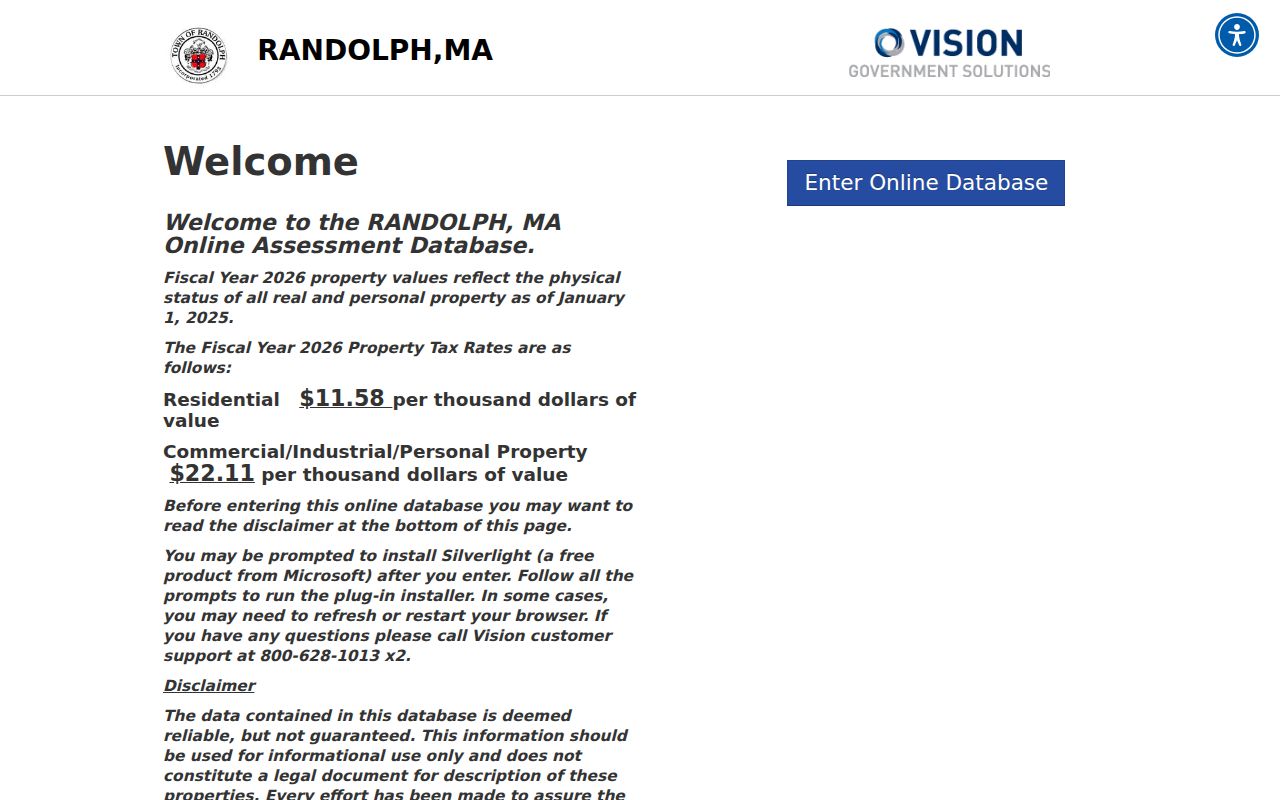
Record the fiscal year and assessment date with any owner lead because the town is conducting cyclical reassessment and parcel data can change. MapGeo adds parcel-boundary context, but the returned assessor card and the deed are the better sources for the fields they actually display.
Norfolk Deeds for Randolph Residents
Norfolk Registry records offer a deep legal-title trail for Randolph. Recorded Land images and index information reach back to 1793, while Registered Land and Land Court records are separately indexed from 1900. Search the apparent owner as a grantee, choose Randolph in the town field, and then read the document reference rather than relying on a name alone. Addresses were included systematically for applicable documents beginning in 2003, so older research often requires a party name, legal description, plan, or book and page.
A grantor is the person or entity transferring an interest; a grantee receives it. A deed can connect those parties, a recording date, a book/page or document number, and a legal description. It establishes title context, not a current living arrangement. For a street-by-street parcel method, use the Randolph street directory approach after the owner and parcel have been identified.
- Parcel
- The assessment unit tied to a particular property record.
- Situs address
- The location of the parcel or building, which can differ from the tax-bill mailing address.
- Grantor and grantee
- The transferor and recipient named on a recorded instrument.
- Recorded Land and Registered Land
- Separate Norfolk index systems that should both be checked when a title trail is incomplete.
| Registry search field | How it helps | Randolph use |
|---|---|---|
| Grantor or grantee name | Finds the transfer side of an instrument | Search a name broadly, then narrow |
| Town | Limits results to a municipality | Select Randolph for a local parcel lead |
| Recorded date | Controls the time window | Separate a common name from older results |
| Document type | Distinguishes deeds, mortgages, plans, liens, and related instruments | Use the record type that fits the title question |
| Book/page or document number | Locates a specific recorded reference | Carry it forward when checking prior instruments |
Free online images are marked “Not An Official Copy.” The Registry provides public research and unofficial viewing online, public terminals in Dedham, and mail or in-person copy routes. When a legal copy is needed, ask the Registry about the official-copy method rather than treating a screen image as the final record.
Current Randolph Resident Directories
Current directory-like sources do not have the same reach. The Town Clerk's street-list and local voter channels concern civic records. The assessor identifies an owner of record. The Registry indexes parties to real-estate instruments. Municipal staff listings identify public employees and department contacts only. Use the source whose coverage matches the question, then preserve the date and source of each result.
| Randolph source | What it can show | Keeper | Access route |
|---|---|---|---|
| Annual street list or voter file | Civic name and address fields subject to protections | Town Clerk / Registrars | Local request |
| Assessment database | Owner of record, parcel, and property lead | Assessors' Office | Online entry or office |
| Recorded and registered land index | Deed, mortgage, plan, and other parties | Norfolk Registry | Online, terminal, or copy request |
| Municipal staff directory | Public department contacts and staff names | Town of Randolph | Online directory |
| Permit and planning files | Applicant, address, project, and decision material | Inspectional Services / boards | Permit channel, counter, or request |
Official sources identify the record keeper, the date, and the access limit. Commercially compiled listings can be a starting clue, but their source date, match quality, and provenance may be unclear. They can also require payment or an opt-out request. A Clerk, assessor, Registry, court, library, or archives record is the route for verification.
| Official record route | Commercially compiled listing |
|---|---|
| Shows the custodian and record type, with a date and access rule | May combine older and newer material from sources of unequal quality |
| Has a counter, request, archive, or clerk fallback | May provide limited correction or opt-out processes |
| Can be checked against the original document or file | Should not replace the underlying public record |
Randolph Court and Vital Records
Courts and vital records are identity anchors, not a general residents directory. Quincy District Court serves Randolph for district civil, criminal, traffic, mental-health, and specialty matters. Norfolk Probate and Family Court handles estates, guardianship, divorce, and family matters. The online court result may show a party, docket events, and disposition, but the clerk's public terminal and physical file remain the route for official documents. Sealed, impounded, juvenile, adoption, and protected material is not open for ordinary searching.
For births, deaths, marriages, marriage intentions, and burial permits tied to Randolph, the Town Clerk is the local first contact. Massachusetts Archives holds statewide vital records for 1841-1935, with 1841-1930 images searchable through FamilySearch. More recent access follows state eligibility and identification rules. Birth and marriage records generally open after 90 years, and death records after 50 years, subject to the statutory exceptions.
The Massachusetts vital-record ordering instructions set out the information and identification a requester may need.
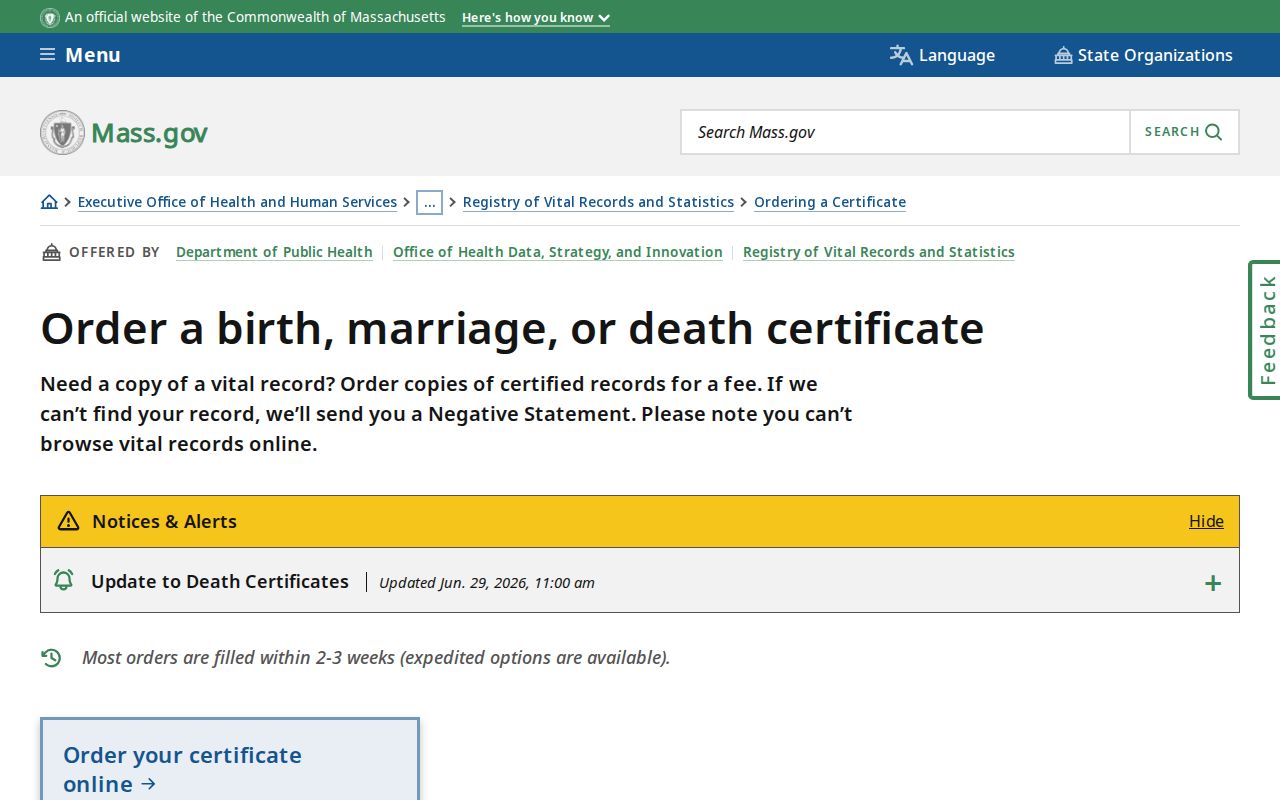
A historical index, an uncertified scan, and a certified copy have different uses. The State Archives may accept email, mail, or in-person requests for its historical series, while local and statewide current records follow the relevant registrar process.
Randolph Limited Custody Searches
Custody and registry information has narrow official routes and should not be used as a substitute for a general identity search. No public Norfolk County web jail roster was located. The Norfolk Sheriff's office can be contacted about lawful custody questions, while the Massachusetts Department of Correction directs state-prison inquiries to VINELink by full name or commitment number. County custody is not necessarily included in the state route.
The official Massachusetts sex-offender information page explains the public search paths and classification limits.
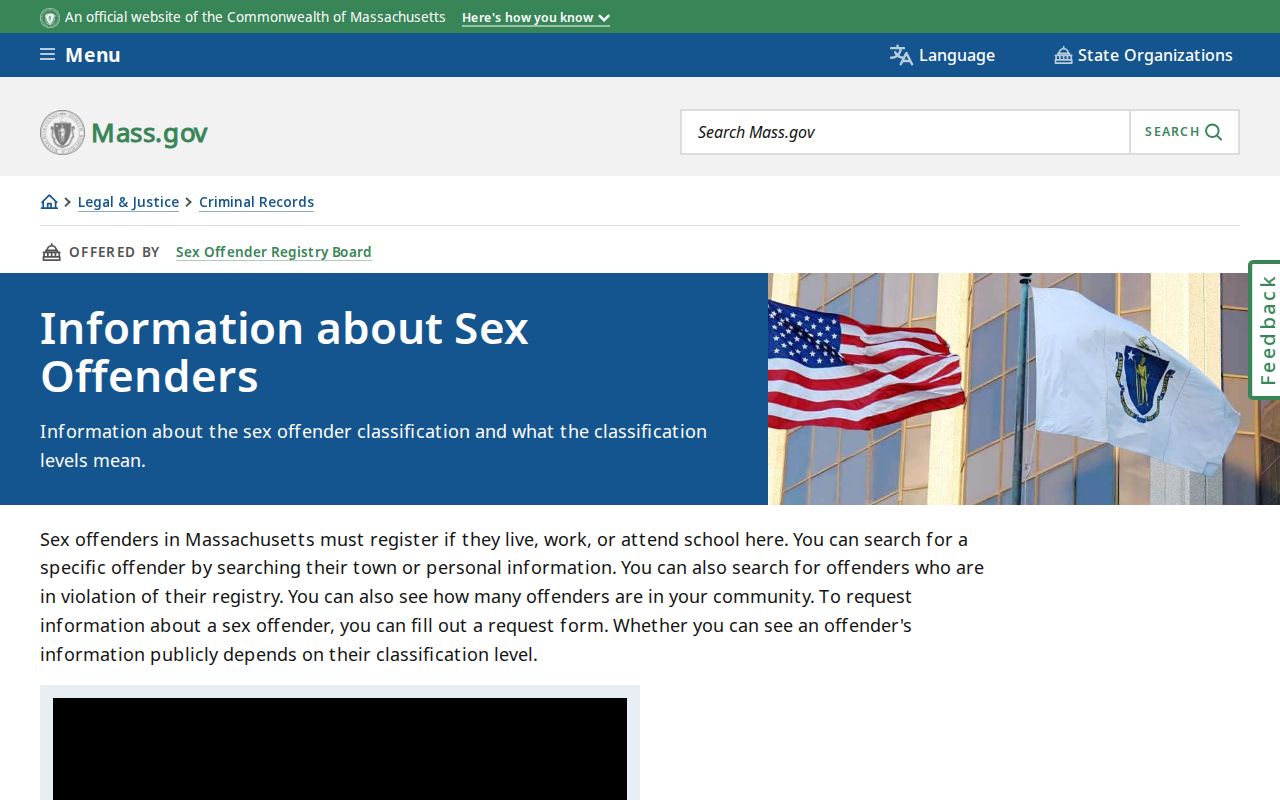
Classification rules determine what may be displayed. A result should not be used to make a broad identity claim or to publish protected details.
The Massachusetts prison-locator instructions describe the DOC and VINELink route.
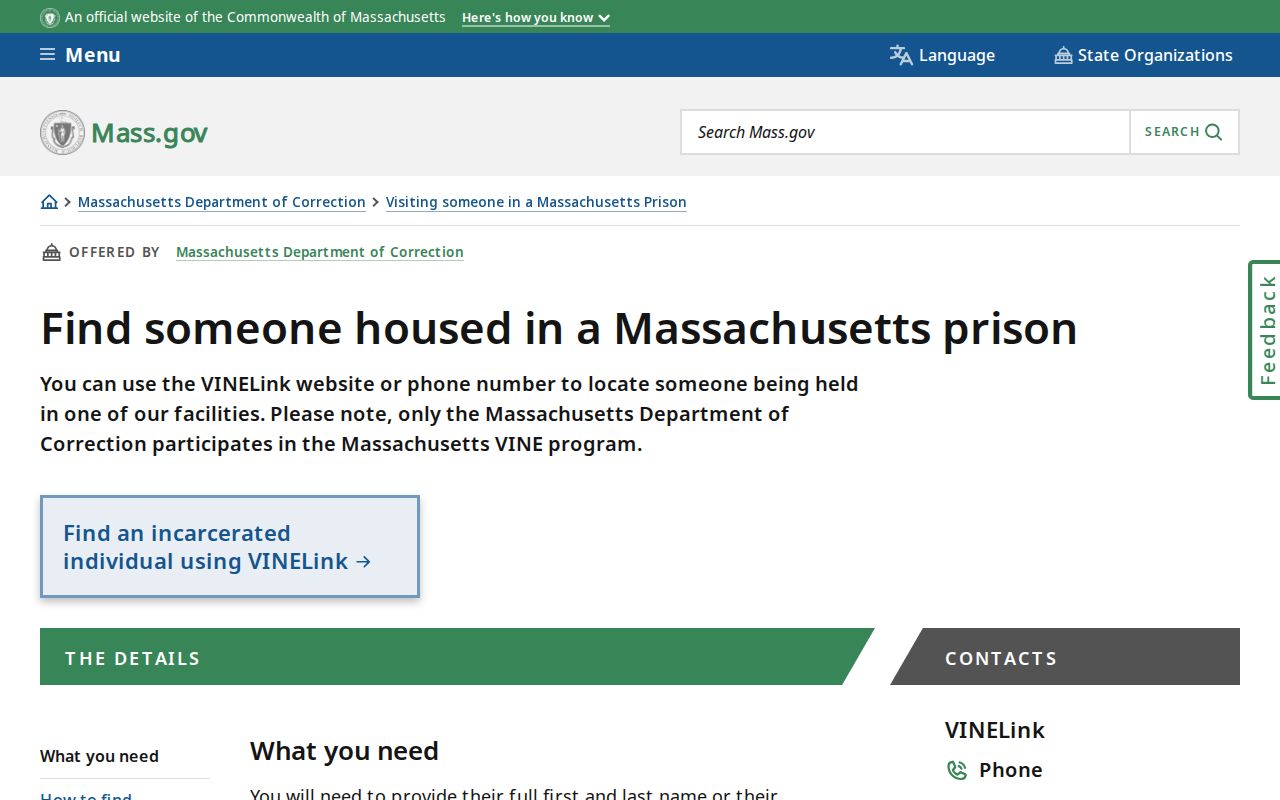
The named search or commitment number is required for the DOC route. For a county question, ask the Sheriff what information may lawfully be released rather than assuming an online result exists.
Randolph Family-History Leads
Family history and reconnection work benefit from a layered trail. A probate file can identify a personal representative, heirs, a will, or property references after a death. The Turner Free Library's Oracle yearbooks can add a class year, photograph, activity, or name variant. Newspaper notices can point to a death, family relationship, civic event, or former address. Those human details need confirmation against a deed, vital record, or court file when the fact matters.
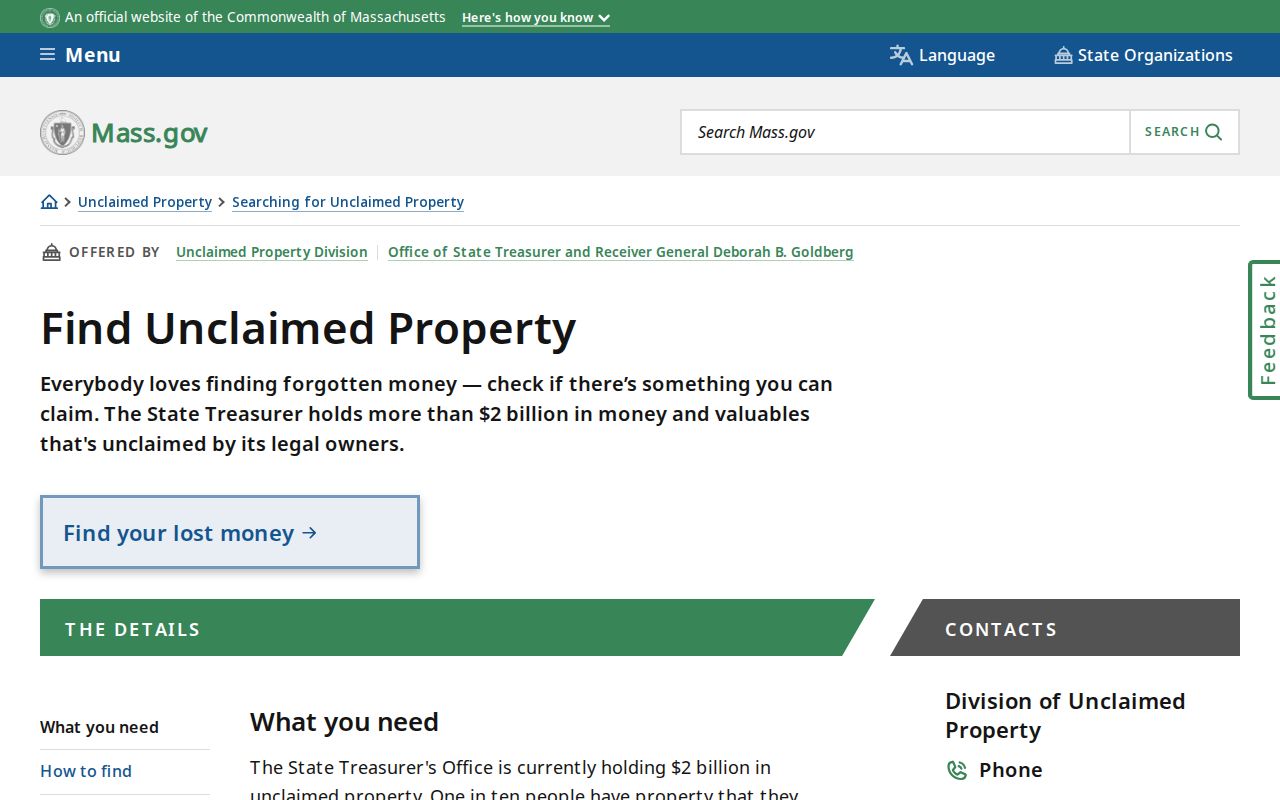
Massachusetts unclaimed property is another narrow state-held lead. The name and address search may identify a possible owner, but a claim requires proof and the result does not establish a current residence. The Massachusetts unclaimed-property search describes its free search and claims process.
For an heir matter, pair an unclaimed-property match with probate, a death record, and a deed before reaching any conclusion about a family connection. Note: A yearbook, obituary, or claim match is corroboration, not proof of a person's present address.
Historical Randolph Resident Directories
The Massachusetts State Library holdings list Randolph directories for 1884, 1891, 1895, 1898, 1905-1906, 1908, 1911, 1914, 1916, 1921, 1926-1927, 1940, 1947, and 1950. It also lists voting lists for selected years from 1932 through 1989. The holdings list confirms the historical shelf, not that every volume is digitized or remotely available. A directory entry can preserve a name, street number, occupation, business line, or period notation such as a widow mark.
Read an old entry in its own year. Check the abbreviation key, copy the spelling as printed, and look for a street or reverse section when one survives. An owner, occupant, or boarder may appear differently. The complete collection context and household-tracing method are developed in the Randolph directory book.
The State Library's directory and voting-list holdings provide the authoritative year-run starting point.
Turner Archives and Randolph Residents
Turner Free Library adds a local memory layer beyond the printed residents directory volumes. Its digital history collection includes town reports, Randolph High School Oracle yearbooks, town history, Civil War material, library records, and street-scene photographs. The newspaper archive is especially useful for a surname, street, school, church, civic-board, obituary, or announcement search: it contains 35,013 pages of the Randolph Herald from 1967-1993 and 5,974 pages of the Randolph Mariner from 1985-1990.
The library's history also explains a real records gap. Its original building and most contents were destroyed by fire on December 6, 1962; service resumed that day from temporary space, and the library later rebuilt. Cross-check local material with State Library, State Archives, FamilySearch, and Registry sources when a year or volume is missing. The Turner Digital History collection is the entry point for the online local-history material.
Randolph License and Business Checks
Business and professional records can confirm a role or filing, not a personal residence. The Randolph Town Clerk holds local DBA and business-certificate material. At the state level, the Corporations Division supports entity, officer/director, identification-number, and filing-number searches. Massachusetts license systems have their own coverage and fields. Treat an officer address, registered agent, or license location as record-specific information rather than proof of where a person lives.
The Massachusetts Division of Occupational Licensure search shows the state license lookup route.
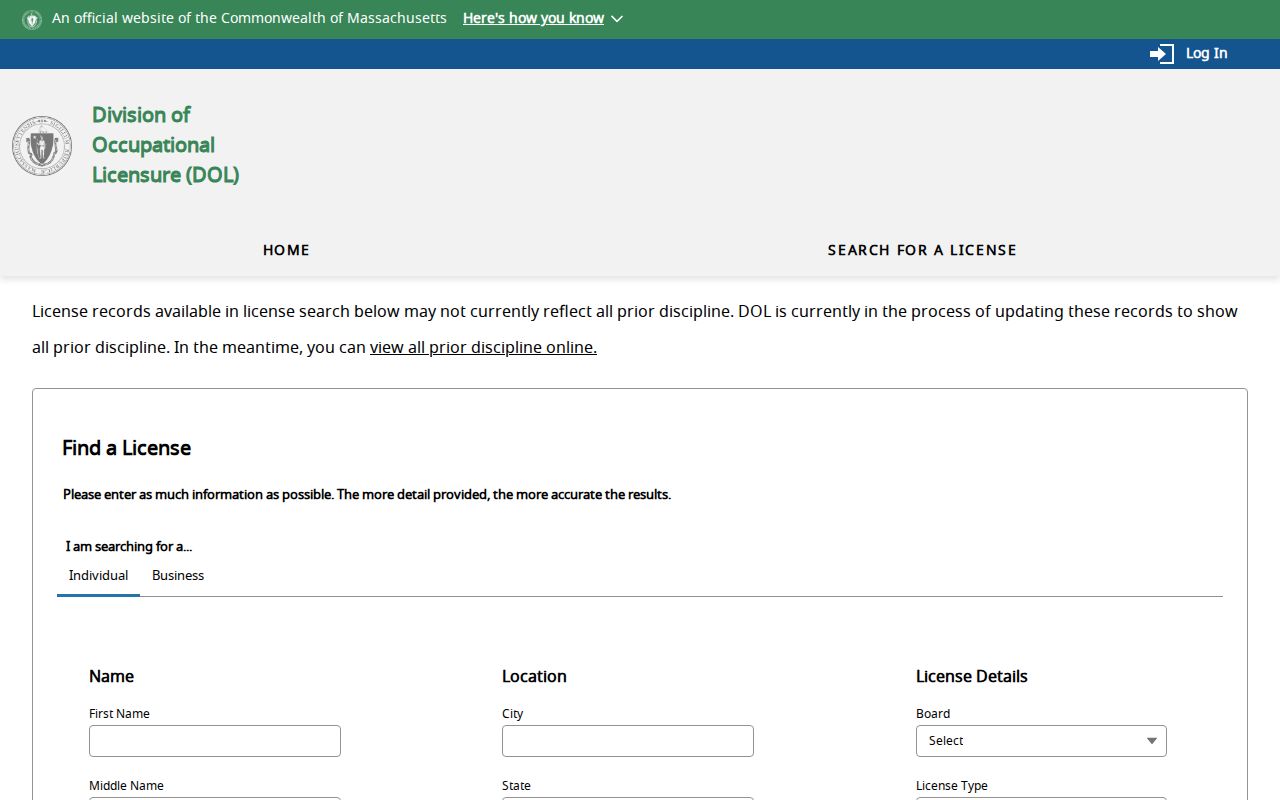
Use the name, city, state, ZIP, board, type, or license-number fields only to verify the license record being viewed. The underlying Town Clerk and state filing channels remain the right place for their own records.
Randolph Resident Privacy Boundaries
Massachusetts public access is record-specific. Confidential voters are omitted from ordinary public voter lists, and phone, email, veteran, permanent-absentee, and minor or pre-registrant information is protected. Federal law also restricts personal motor-vehicle information. A deed, parcel card, or voter request is not permission to reconstruct every household member, utility customer, delivery recipient, or protected address.
The Massachusetts Address Confidentiality Program gives qualifying participants a substitute address and mail-forwarding route, while confidential-voter procedures exclude qualifying records from normal lists. Court sealing, impoundment, juvenile confidentiality, adoption restrictions, protected-victim information, and restricted death-record SSNs are separate limits. Respect a record's redactions and consult the custodian about procedures instead of attempting to infer what has been withheld.
Randolph Public Records Requests
When an online index does not expose the needed public record, make a narrow request to the office that holds it. Massachusetts Public Records Law, M.G.L. c. 66, § 10, generally calls for a response within 10 business days. Send the request to the Town Clerk or the department's Records Access Officer, identify the specific series, provide a date range, and ask for the segregable public portion in an electronic format if that works. An agency does not have to create a new list or answer an open-ended research question.
The state public-records request guidance explains the request, fee, and appeal framework.
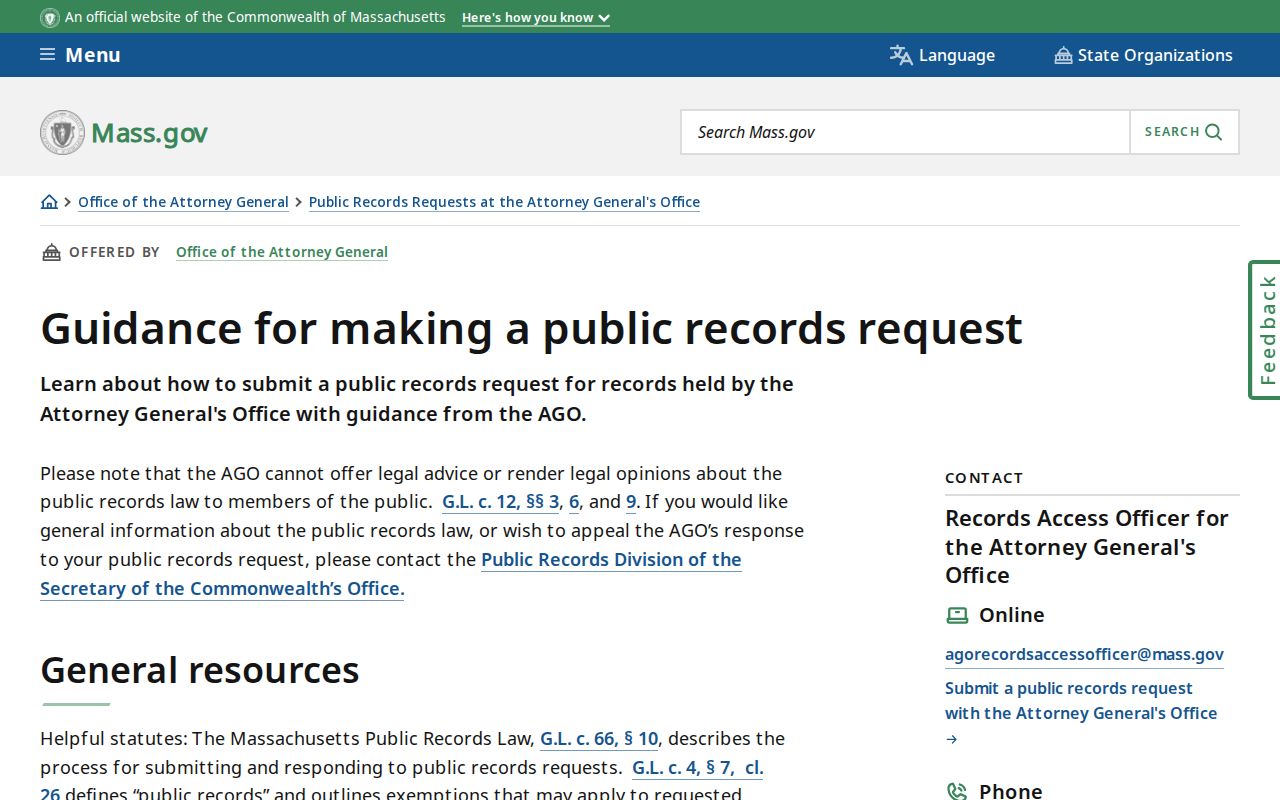
Ordinary black-and-white copies are capped at five cents per page, and labor charges generally begin after the first four hours, subject to the state rules. Ask for a cost estimate and redactions when the request may be broad. Note: A focused request for an existing record usually produces a clearer answer than a request asking an office to locate a person.
Randolph Records Through Time
Randolph's records are not equally strong in every era. The Norfolk land trail begins in 1793, and the Registry's transcription project helps with 1793-1900 cursive records. The scanned Registry index reaches 1793-1955, while electronic registered-land recording began in 2017. Older property work may need a legal description or plan because an address-only search becomes more dependable only for applicable documents recorded from 2003 onward.
Record continuity also depends on the institution. State Archives is still digitizing the recently transferred 1931-1935 vital-record group, creating a bridge between 1841-1930 FamilySearch images and more recent registrar custody. For historical Randolph names, save the source title, year, page, repository, and original spelling. That small record trail makes later comparison possible when a directory, newspaper, deed, or library collection supplies only part of the answer.