
Randolph Resident Lookup Records to Compare
Start with the kind of fact that needs confirmation. Randolph has no single public statewide resident database. The Town Clerk holds local voter and street-list material, Vision provides an owner-and-parcel lead, Norfolk Registry records legal title, and MassCourts exposes public docket information under court rules. Historical identity details travel through the Town Clerk, the Registry of Vital Records and Statistics, the Massachusetts Archives, and court clerks. Each source has a different date, purpose, and privacy boundary.
| Randolph record | What it can confirm | Custodian or portal | Access route |
|---|---|---|---|
| Local voter or street list | Civic registration and address information at a point in time | Randolph Town Clerk | Local request; protected voters omitted |
| Parcel card | Owner of record, situs, assessment, possible mailing address | Vision assessment database | Online lead; verify card details with the office |
| Deed or plan | Legal title, parties, recording date, legal description | Norfolk Registry of Deeds | Online index and images from 1793 forward |
| Court docket | Party, case type, events, date, and disposition | MassCourts and court clerks | Public access rules; protected files excluded |
| Vital record | Birth, marriage, death, and event-place anchors | Town Clerk, RVRS, Archives | Historical research or eligibility-based request |
Use the public result as a lead. An owner can receive tax mail elsewhere, a deed party may not live at the parcel, and an indexed court party can share a name with another Randolph resident. The match becomes stronger only when independent records agree.
Randolph Resident Lookup at the Town Clerk
Randolph's Clerk and Registrar is the local fallback when a statewide name search does not exist. The office keeps annual town census and street-list books, voter registration and election records, births, deaths, marriages, marriage intentions, burial permits, and local business-certificate material. It is at Town Hall, 41 South Main Street, and the Clerk's phone is 781-961-0901. A request should state the record series, date range, and preferred electronic or paper format.
The Secretary of the Commonwealth explains that local public voter material can include a name, address, party, date of birth, active or inactive status, voter ID, registration history, and elections voted. Phone, email, veteran status, permanent absentee status, minors or pre-registrants, and confidential-voter data are not open in the same way. The statewide voter list is not a general public record, so a Randolph request belongs with the local election officials.
Note: A local list can help test a civic-address lead, but it does not establish every person who may be at an address.
Randolph Resident Court Name Fields
MassCourts is the public entry point for court cases. Randolph's district matters generally route through Quincy District Court, while Norfolk Probate and Family Court in Canton handles estates, guardianships, and family matters. The public search asks for court department, division, location, and an optional result count. It offers Name, Case Type, Case Number, and Ticket or Citation tabs. The Name search is for civil cases and requires a correctly formatted two-character minimum last name.
The MassCourts landing view identifies the route to the public search. Choose the court and tab that match the record sought rather than treating a broad name result as a confirmed identity.
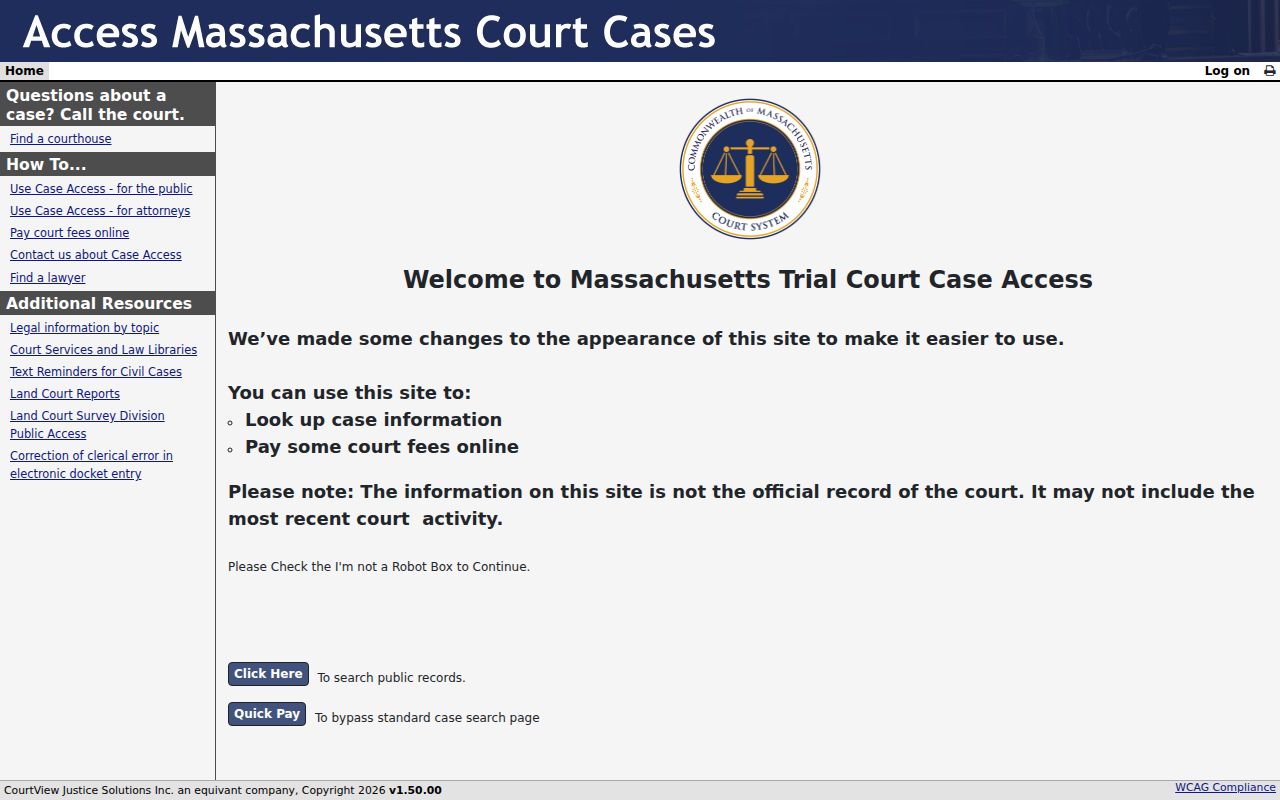
Case-type searches use a date range limited to 30 days, case numbers must be exact, and documents vary by court department and case type. Public web access is not the official case file.
| Party name | The indexed person or entity, useful for comparing name variants rather than proving identity alone. |
|---|---|
| Court and location | The department, division, and courthouse connected to the docket. |
| Docket number | The case identifier used by the clerk and public terminal. |
| Case type and events | Filed events, dates, and docket activity visible under the applicable public rules. |
| Disposition | A recorded outcome or status, not a full biography of the person named. |
Verify a Randolph Resident Across Records
A careful name check uses a name to find a second fact, then tests that fact in another index. Begin with a local voter or street-list request when the question concerns civic residence. For an owner question, use the Randolph Vision assessment database for a parcel lead, then compare the owner in the Norfolk Registry. For a court or estate question, use the correct MassCourts location and ask the clerk about the public terminal or file route.
- Write down the full name, initials, alternate spellings, approximate date range, and any known Randolph address.
- Anchor the name to one record, such as a local voter request, parcel card, deed, or historical directory.
- Check a second source with a different purpose, such as a deed for title, a docket for a case, or an Archives index for a life event.
- Compare addresses, spouse or relative references, middle initials, dates, and court or parcel details before combining results.
- Request the official copy from the custodian if a certificate, file, or legal record is actually needed.
- Docket
- The court's running list of filings, events, and case actions under a case number.
- Index and image
- An index points to a record; an image is the viewed document or scan, which may have separate access rules.
- Certified copy
- A custodian-issued copy used when formal certification is required, unlike an ordinary web image.
Randolph Court Results Need Clerk Review
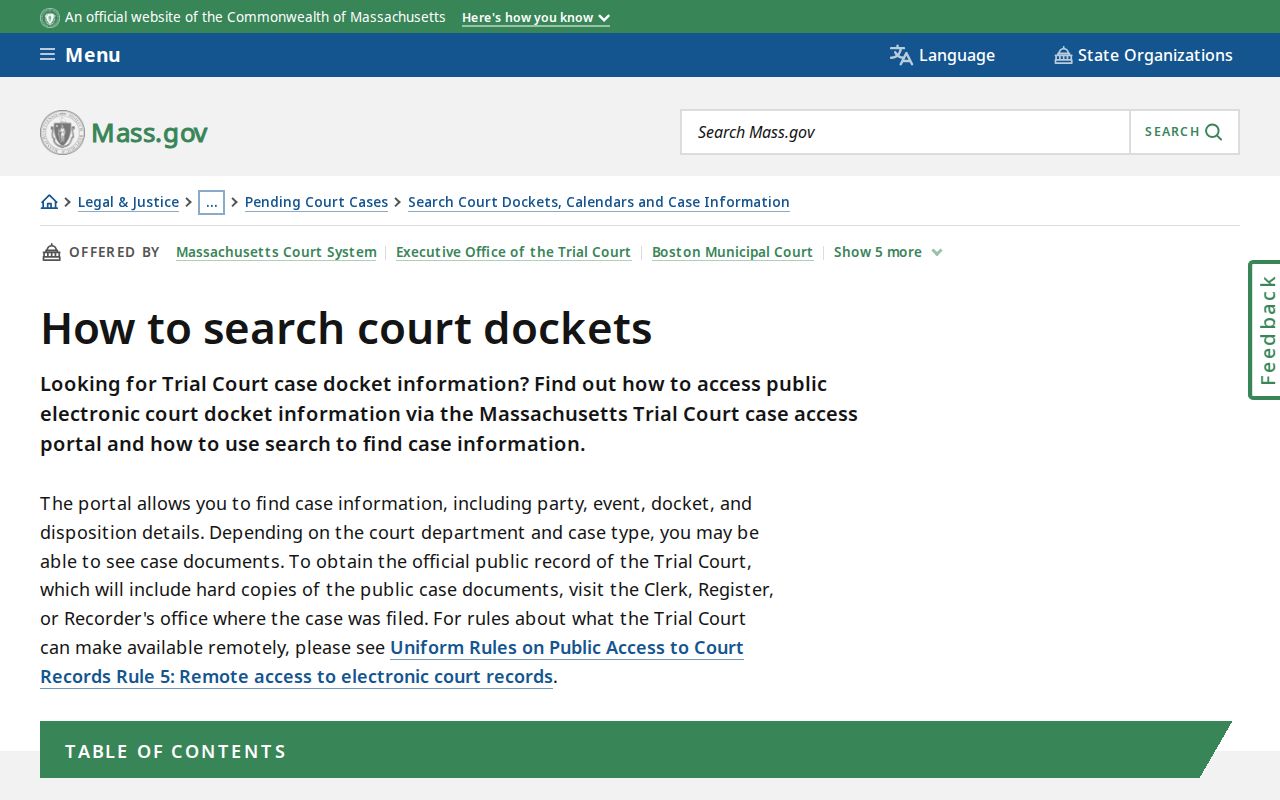
Massachusetts docket-search instructions distinguish web results from courthouse public terminals. Terminals are available at the listed court departments and Registry of Deeds locations. The Clerk, Register, or Recorder where the file was made is the keeper of the official hard-copy record. Call Quincy District Court at 617-471-1650 before a visit to ask about the docket, public access, archives, copies, and certification.
The official instructions distinguish web access from a clerk-held file. A public result can confirm that a person with an indexed name appeared in a case, but it cannot by itself prove that the named party is the Randolph resident being researched. Juvenile, adoption, sealed, expunged, impounded, and protected-victim material has additional limits.
For a probate trail, Norfolk Probate and Family Court is the more relevant route than Quincy District Court. Estate files can identify a petitioner, personal representative, heirs, will, notices, and property references when the material is public.
Randolph Resident Vital Record Routes
The Town Clerk is the first call for an event recorded in Randolph, a Randolph marriage intention, burial permit, or local certified copy. The published local fee list gives $10 for a birth, death, or marriage certificate, but that list is dated 2019 and should be confirmed before ordering. The state route asks for the person's name, event date and place, photo ID, and relationship documentation where required.
Massachusetts Archives vital-record collections hold statewide births, marriages, and deaths from 1841-1935. FamilySearch offers free 1841-1930 images, while the Archives can provide up to five unique scans by email when an image cannot be found. Certified archive copies are $3, with up to a 12-week estimate. Birth and marriage records are generally restricted until 90 years after the event, and deaths until 50 years, subject to the stated exceptions.
The archival collection is the route for historical identity work, not a current resident list. Records for 1931-1935 are still being digitized after their transfer to the Archives.
Keep index information, an uncertified scan, and a certified copy separate in research notes. They serve different purposes and may be available through different channels.
Randolph Records for Heirs and Classmates
Name research can support a narrow family or reconnection question without pretending to map a current household. For an heir question, start with the decedent's name in Norfolk Probate and Family Court, then compare a public estate file with a death record and a Norfolk deed. Title can pass through probate rather than a new deed, so a broken deed chain may be a prompt to search estate records instead of assuming a missing transaction.
For a former classmate, Turner Digital History's Oracle yearbooks, the Randolph Herald and Mariner archives, library reference material, and public alumni history offer a dated local context. A yearbook can supply a school year, photograph, club, or name form. It is not a present-contact directory. This research route is most useful when each result is preserved with its date and verified against the custodian record that answers the actual question.
Randolph Resident Name Checks
When a person is connected to a public credential or entity, Massachusetts maintains separate official lookups. The Secretary of the Commonwealth entity search supports entity, officer or director, identification-number, and filing-number modes. The Division of Occupational Licensure eLIPSE search supports name, city, state, ZIP, board, type, and number fields. These sources can corroborate a public affiliation, but they do not prove that a person lives at an address.
Massachusetts health-profession verification is another official credential route. Its source view identifies a license-status check rather than a general personal record.
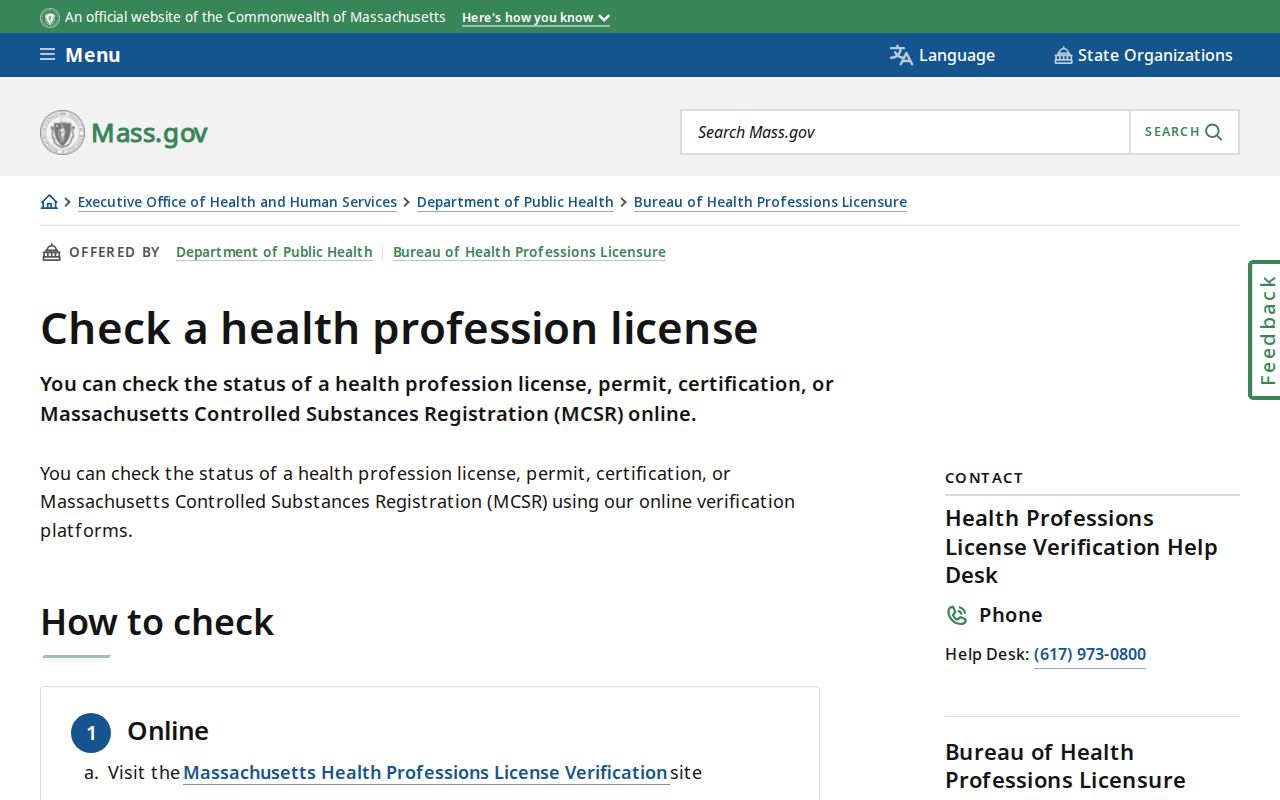
Use a public filing or credential alongside an independent date, address, parcel, or court detail before connecting it to a particular resident with a common name.
Randolph Privacy Boundaries
Massachusetts protects records by type rather than publishing one complete resident roll. Confidential voters, Address Confidentiality Program participants, minors, protected contact fields, sealed court material, juvenile and adoption records, and some death-record SSN information are not ordinary public search material. The Massachusetts Address Confidentiality Program supplies a substitute legal address and mail-forwarding service for qualifying participants; it does not erase every prior public disclosure.
When a public record is unavailable, a narrow request under the Massachusetts Public Records Law may still reach a segregable public portion. Ask for the record series, date range, and electronic format. The agency has no duty to create a list it never kept.