
Finding Randolph Residents
No single public roll lists everyone who lives in Randolph. So the right first move depends on the question you bring. Need a current civic address? The Town Clerk's street list or voter record is the place to start. Ownership questions belong with the assessor. Tracing a former household means working across deeds, printed city directory volumes, newspapers, and probate files at once. Each record answers a different question. The labels are not interchangeable: an owner, an occupant, a boarder, a mailing addressee, and a registered voter are five different things in the records.
Search a name exactly as you know it first. Then test spelling variants, and add a middle initial where the record allows it. Treat every returned name as a lead rather than a conclusion. Before you decide two entries are the same person, compare the street, date, parcel, or family detail against an independent record. A clerk can explain a record series, its current form, any access rule, or the fee. Protected details, though, are never a phone lookup.
- Request the relevant Randolph street list or local voter record when the aim is a current civic-residence lead.
- Search the assessor database by owner, location, or parcel to identify the property owner of record and the parcel context.
- Check the Norfolk Registry index for the owner, grantor, or grantee, then compare the recorded deed details.
- For an earlier household, use the State Library directory holdings, Turner collections, newspapers, and census records for the right period.
- Send a focused written records request when a public series is not online, naming the date range and record type sought.
Randolph Street Lists and Voters
For street lists and voter questions in Randolph, the Town Clerk is the place to begin. The Clerk keeps the annual town census, the street-list books, and voter registration records, along with party and address changes, local election materials, vital events, business certificates, burial permits, and other municipal filings. The office sits at Town Hall, 41 South Main Street, Randolph, MA 02368, and lists its phone as 781-961-0901. Going local matters here. Massachusetts offers no general statewide public name lookup covering all registered voters, so the municipal route is the practical one.
What can a voting list actually contain? The Secretary of the Commonwealth describes the fields: a voter's name, residence address, party, date of birth, activity status, voter ID, and related registration details. Phone numbers, email addresses, veteran status, permanent-absentee status, minors, and confidential voters stay out of the ordinary public list. A written request can narrow things to Randolph, set a date range, choose paper or electronic format, and specify a precinct or street when that helps. Ballot choices never appear. Note: A historical voting list can support a date-specific family-history lead, but it does not establish present residence.
Randolph Resident Records Offices
Three offices anchor a Randolph residents directory search. The Town Clerk holds the local civic and vital material. The Assessors' Office supplies the property-owner trail. Norfolk County, meanwhile, keeps the deed and plan record that can verify legal title. Each office keys its files to different identifiers. So a name surfaced in one system deserves a check in whichever office answers the next question about a resident or parcel.
Norfolk Registry of Deeds
649 High Street
Dedham, MA 02026
781-461-6101
Randolph Assessors' Office
41 South Main Street
Randolph, MA 02368
781-961-0906
Randolph Clerk / Registrars
41 South Main Street
Randolph, MA 02368
781-961-0901
Randolph sits in Norfolk County. So the Registry works out of Dedham rather than the town itself. The assessor and the Clerk both serve the public at Town Hall. Online access does not always go far enough for a resident lookup. Each office therefore keeps a counter, phone, mail, or request channel. That channel is suited to the record it holds.
Randolph Property Owner Records
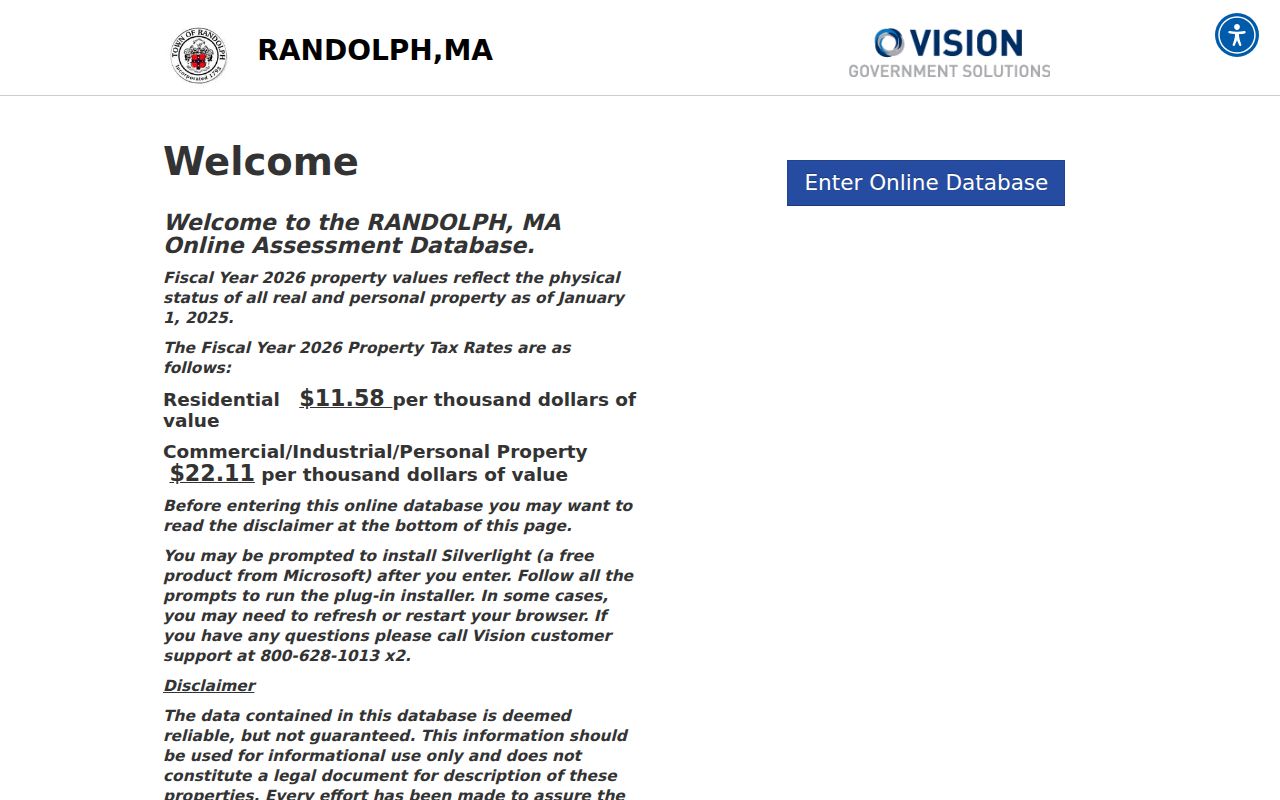
Randolph's Vision assessment database is the current property lead. Its welcome page identifies FY2026 values based on physical status as of January 1, 2025, while the live database route is intended for owner, location/address, and parcel searching. A parcel result can point to the owner of record, situs address, valuation, and property characteristics. It cannot prove that the owner lives at the property or identify every household member there. A tax-bill mailing address can also be outside Randolph.
The official Randolph FY2026 assessment database shows the entry point for the town's online property records.
Note the fiscal year and assessment date with any owner lead. Randolph is conducting cyclical reassessment. Parcel data can shift as that work proceeds. MapGeo adds useful parcel-boundary context. Still, the assessor card and the deed remain the better sources. They cover the fields they actually display.
Norfolk Deeds for Randolph Residents
The Norfolk Registry gives Randolph one of the longest legal-title trails around. Recorded Land images and index data stretch back to 1793. Registered Land and Land Court records sit in a separate index that starts in 1900. To dig in, search the likely owner as a grantee and set the town field to Randolph. Then read the actual document reference. A name alone can mislead. Addresses only appear systematically in applicable documents from 2003 onward, so older searches usually need a party name, legal description, plan, or book and page.
Keep the roles straight. A grantor transfers an interest. A grantee receives it. One deed can tie the parties to a recording date, a book and page or document number, and a legal description, which builds title context rather than a picture of who lives there now. For a street-by-street view, turn to the Randolph street directory method once an owner and parcel are pinned down.
- Parcel
- The assessment unit tied to a particular property record.
- Situs address
- The location of the parcel or building, which can differ from the tax-bill mailing address.
- Grantor and grantee
- The transferor and recipient named on a recorded instrument.
- Recorded Land and Registered Land
- Separate Norfolk index systems that should both be checked when a title trail is incomplete.
| Registry search field | How it helps | Randolph use |
|---|---|---|
| Grantor or grantee name | Finds the transfer side of an instrument | Search a name broadly, then narrow |
| Town | Limits results to a municipality | Select Randolph for a local parcel lead |
| Recorded date | Controls the time window | Separate a common name from older results |
| Document type | Distinguishes deeds, mortgages, plans, liens, and related instruments | Use the record type that fits the title question |
| Book/page or document number | Locates a specific recorded reference | Carry it forward when checking prior instruments |
Free deed images online carry a “Not An Official Copy” watermark. The Registry of Deeds still opens several doors. You can view records unofficially from home, use public terminals in Dedham, or request copies by mail or in person. For a legal copy, ask Registry staff how to order the official version. A screen image alone is not the record of consequence.
Current Randolph Resident Directories
No current source covers Randolph like a classic city directory. The Town Clerk keeps the street list and local voter rolls. The assessor names each owner of record on the property rolls. The Registry indexes parties to real-estate instruments. Municipal staff listings only name public employees and department contacts. Match the question to the source that actually reaches it. Keep the date and source of every result you save.
| Randolph source | What it can show | Keeper | Access route |
|---|---|---|---|
| Annual street list or voter file | Civic name and address fields subject to protections | Town Clerk / Registrars | Local request |
| Assessment database | Owner of record, parcel, and property lead | Assessors' Office | Online entry or office |
| Recorded and registered land index | Deed, mortgage, plan, and other parties | Norfolk Registry | Online, terminal, or copy request |
| Municipal staff directory | Public department contacts and staff names | Town of Randolph | Online directory |
| Permit and planning files | Applicant, address, project, and decision material | Inspectional Services / boards | Permit channel, counter, or request |
Official records name the keeper, the date, and the access limit. Commercially compiled resident listings can offer a first clue. Their source date, match quality, and provenance often stay unclear. Some charge fees or demand an opt-out request. For verification, a Clerk, assessor, Registry, court, library, or archives record is the reliable route.
| Official record route | Commercially compiled listing |
|---|---|
| Shows the custodian and record type, with a date and access rule | May combine older and newer material from sources of unequal quality |
| Has a counter, request, archive, or clerk fallback | May provide limited correction or opt-out processes |
| Can be checked against the original document or file | Should not replace the underlying public record |
Randolph Court and Vital Records
Courts and vital records anchor identity, but they are not a general Randolph residents directory. Quincy District Court handles Randolph's district civil, criminal, traffic, mental-health, and specialty matters. Norfolk Probate and Family Court covers estates, guardianship, divorce, and family cases. An online court result may show a party, docket events, and a disposition. The clerk's public terminal and the physical file still hold the official documents. Sealed, impounded, juvenile, adoption, and protected material stays closed to ordinary searching. For births, deaths, marriages, marriage intentions, and burial permits tied to Randolph, the Town Clerk is the local first contact. The Massachusetts Archives holds statewide vital records for 1841-1935, and 1841-1930 images are searchable through FamilySearch. Newer records follow state eligibility and identification rules. Birth and marriage records generally open after 90 years, and death records after 50 years, subject to statutory exceptions. The Massachusetts vital-record ordering instructions set out the details and identification a requester may need.
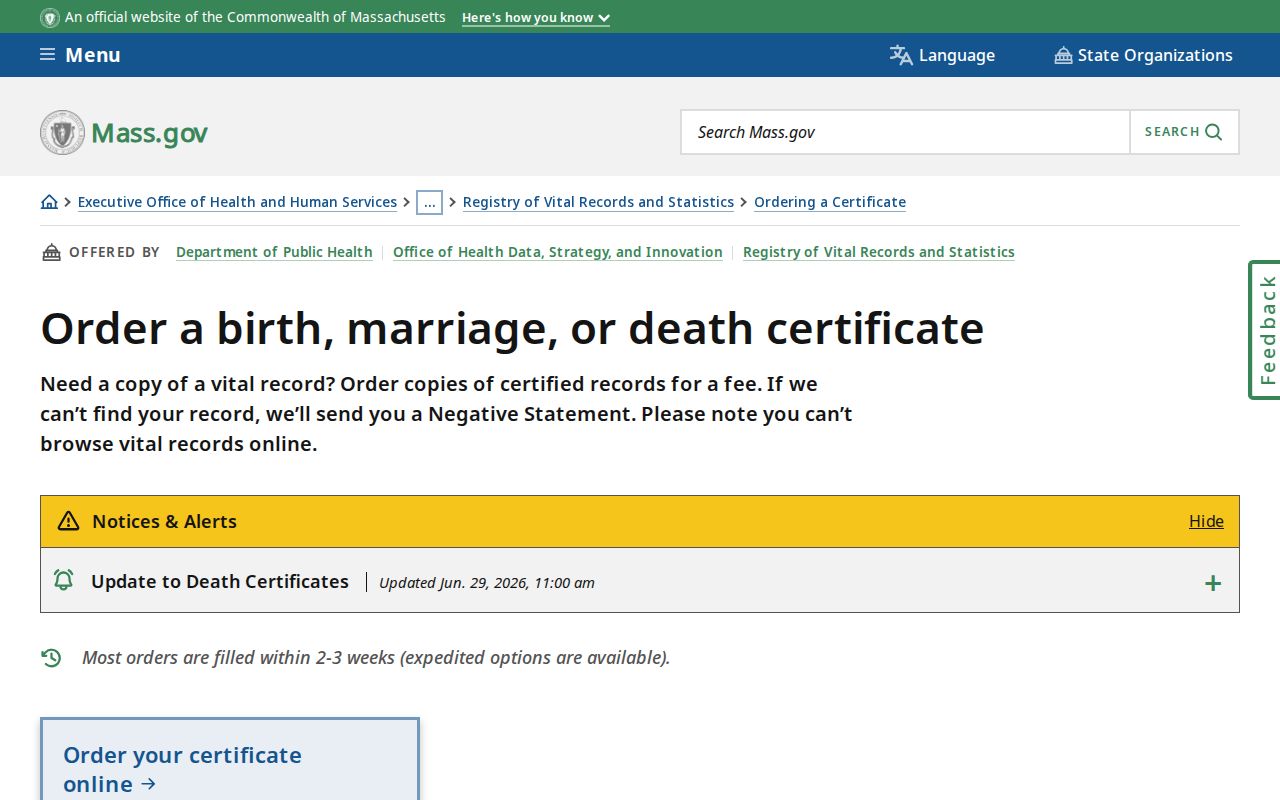
A historical index, an uncertified scan, and a certified copy serve different purposes. The State Archives accepts email, mail, or in-person requests for its historical series. Current records, local or statewide, follow the registrar's own process.
Randolph Limited Custody Searches
Custody information has narrow official routes, and none of it substitutes for a resident lookup. Norfolk County publishes no web jail roster. For lawful custody questions, contact the Norfolk Sheriff's office directly. State-prison inquiries go through VINELink. The Massachusetts Department of Correction supports it with a full name or commitment number. County custody does not necessarily appear in that state route. The official Massachusetts sex-offender information page explains the public search paths and classification limits.
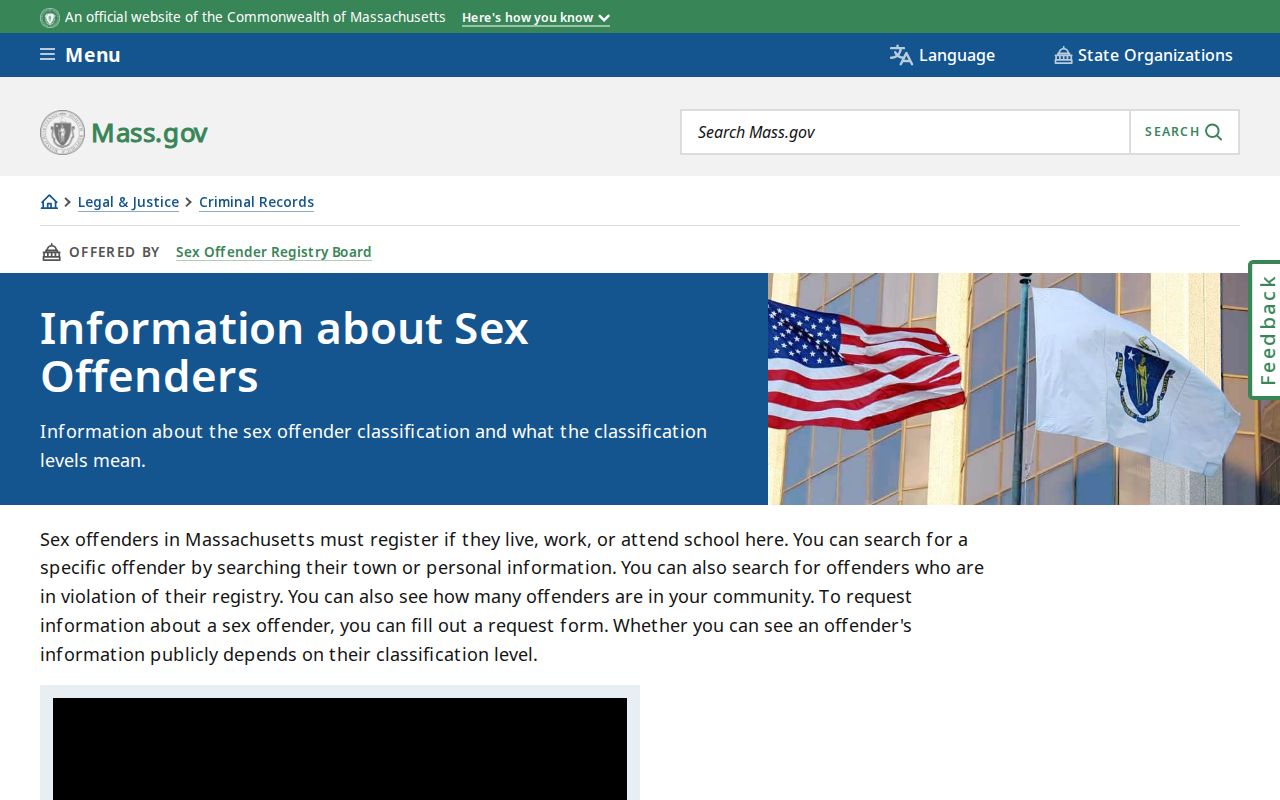
Classification rules decide what may be displayed. No result supports a broad identity claim or the publication of protected details. The Massachusetts prison-locator instructions describe the DOC and VINELink route.
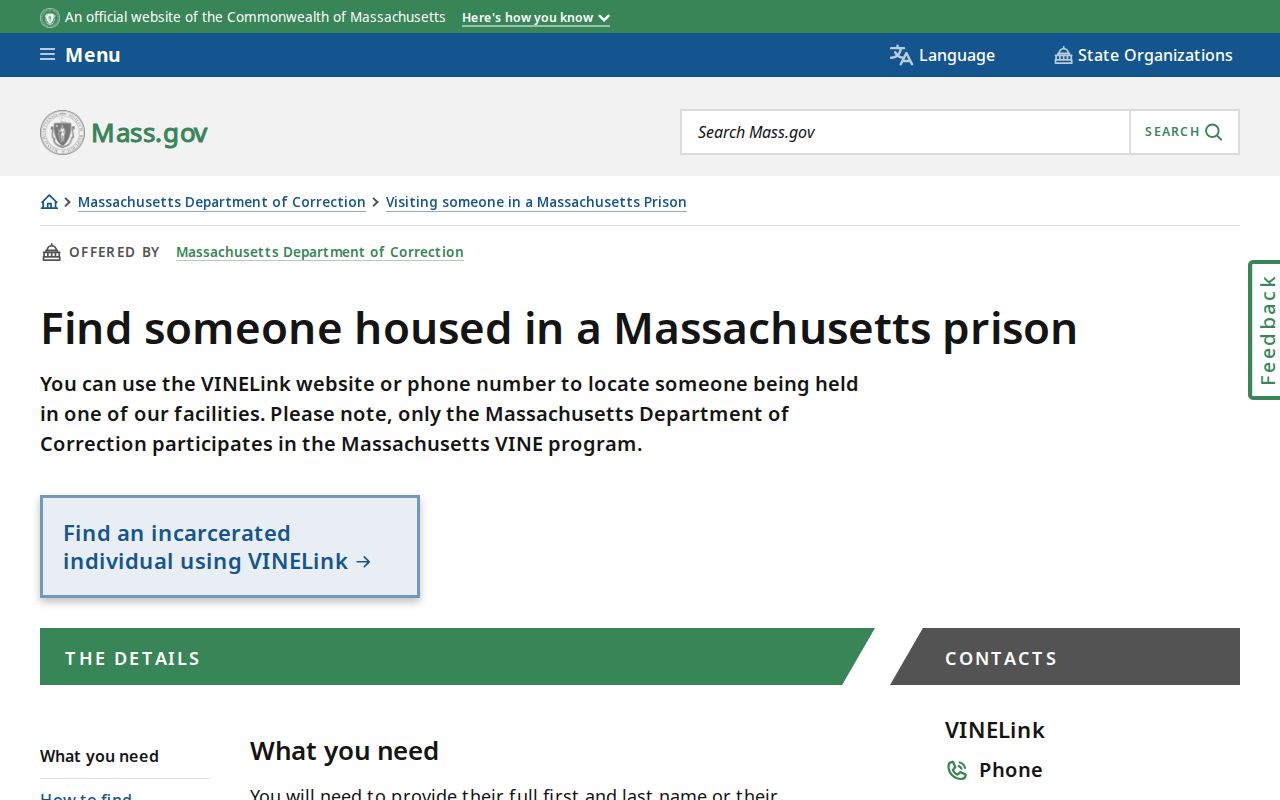
The DOC route needs a full name or commitment number. For a county question, ask the Sheriff what may lawfully be released. Never assume an online result exists.
Randolph Family-History Leads
Family history and reconnection work rewards a layered trail. A probate file can name a personal representative after a death. It may also list heirs, a will, or property references. The Turner Free Library's Oracle yearbooks add class years, photographs, activities, and name variants. Newspaper notices point toward deaths, family relationships, civic events, and former addresses. When a fact matters, confirm it. Check those human details against a deed, vital record, or court file. Massachusetts unclaimed property is another narrow state-held lead. A name and address search may flag a possible owner. A claim still requires proof. A match never establishes a current residence. The Massachusetts unclaimed-property search describes its free search and claims process.
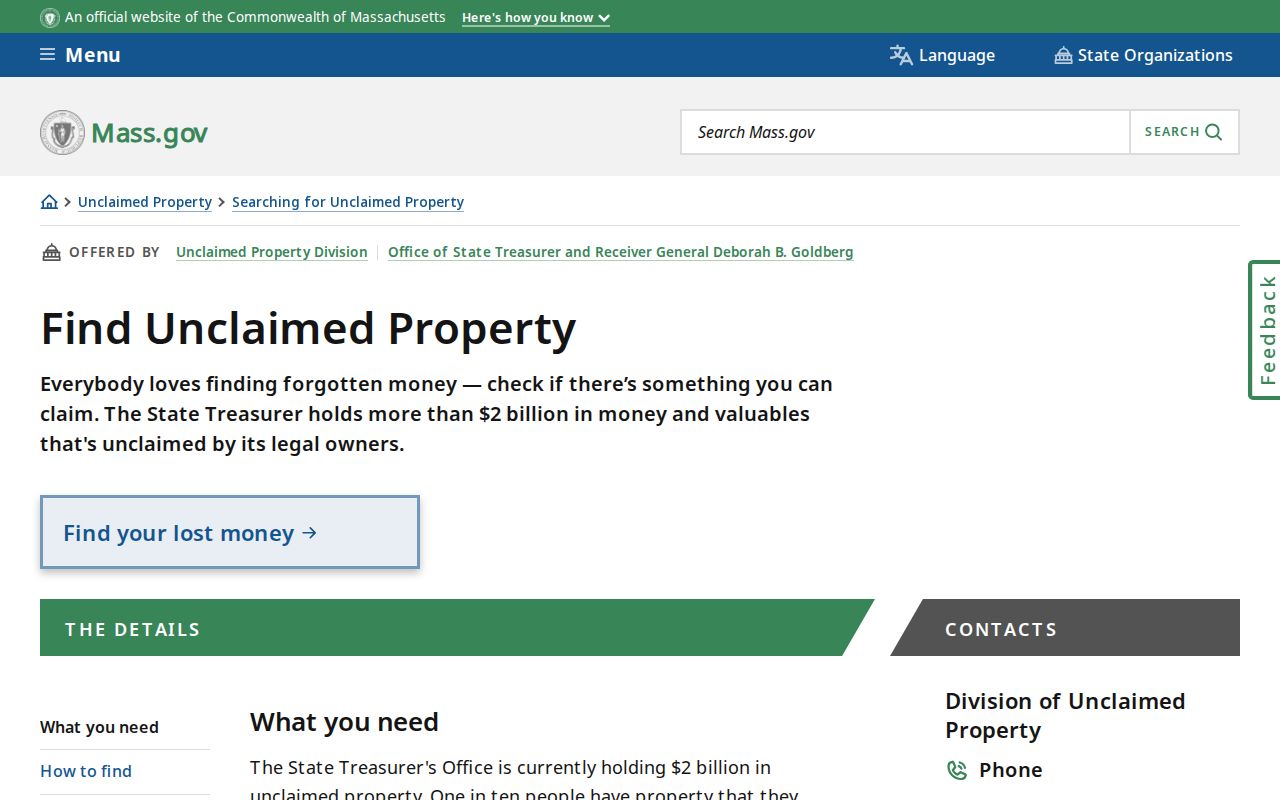
In an heir matter, pair an unclaimed-property match with probate, a death record, and a deed before concluding anything about a family connection. Note: A yearbook, obituary, or claim match is corroboration, not proof of a person's present address.
Historical Randolph Resident Directories
The Massachusetts State Library lists Randolph directories for 1884, 1891, 1895, 1898, 1905-1906, 1908, 1911, 1914, 1916, 1921, 1926-1927, 1940, 1947, and 1950. Voting lists cover selected years from 1932 through 1989. The holdings list confirms the shelf. It does not confirm that every volume is digitized or available remotely. An old street directory entry can preserve a name, street number, occupation, business line, or a period notation like a widow mark. Read each entry in its own year. Check the abbreviation key. Copy spellings exactly as printed. A reverse or street section, where one survives, may list an owner, occupant, or boarder differently. The Randolph directory book develops the full collection context and the household-tracing method. The State Library's directory and voting-list holdings provide the authoritative year-run starting point.
Turner Archives and Randolph Residents
Turner Free Library gives the Randolph residents directory volumes a partner in local memory. Its digital history collection runs deep. Town reports, Randolph High School Oracle yearbooks, town histories, Civil War material, library records, and street-scene photographs all live there. The newspaper archive is the standout. A surname, street, school, church, civic-board, obituary, or announcement search can draw on 35,013 pages of the Randolph Herald spanning 1967 to 1993. The Randolph Mariner adds 5,974 pages, 1985 to 1990.
The library's own history explains a records gap. Fire destroyed the original building and most contents on December 6, 1962. Staff reopened in temporary space that day. The library later rebuilt, and cross-checking against State Library, State Archives, FamilySearch, and Registry sources can cover a missing year or volume. The Turner Digital History collection is the online entry point.
Randolph License and Business Checks
Business filings rarely prove residence. They confirm a role or a filing instead. The Randolph Town Clerk holds local DBA and business-certificate material. The state Corporations Division covers entity, officer and director, identification-number, and filing-number searches. Each Massachusetts license system carries its own coverage and fields. An officer address, registered agent, or license location is record-specific. None of it proves where a person lives. The Massachusetts Division of Occupational Licensure search shows the state license lookup route.
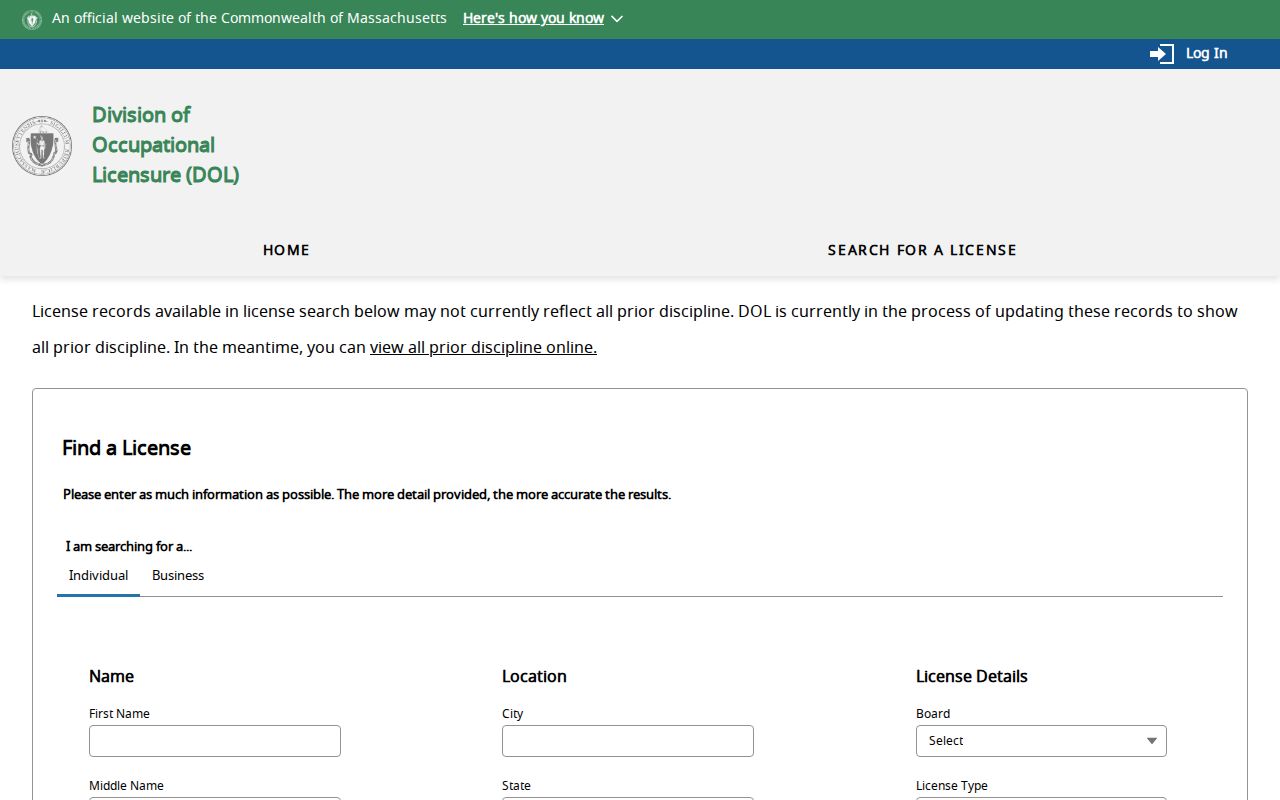
Use the name, city, state, ZIP, board, type, or license-number fields to verify the record in view. They serve that purpose only. Town Clerk and state filing channels keep their own records.
Randolph Resident Privacy Boundaries
Massachusetts public access is record-specific. One record does not unlock a household. Confidential voters are left off ordinary public voter lists. Phone, email, veteran, permanent-absentee, and minor or pre-registrant details stay protected as well. Federal law separately restricts personal motor-vehicle information. A deed, parcel card, or voter request is not permission to rebuild the roster of household members, utility customers, or delivery recipients at a protected address.
The Massachusetts Address Confidentiality Program gives qualifying participants a substitute address and mail-forwarding route, and confidential-voter procedures keep qualifying records off normal lists. Court sealing, impoundment, juvenile confidentiality, adoption restrictions, protected-victim information, and restricted death-record SSNs impose further limits. Respect the redactions and ask the custodian.
Randolph Public Records Requests
Some public records never surface in an online index. Then make a narrow request to the office that holds the record. Massachusetts Public Records Law, M.G.L. c. 66, § 10, generally calls for a response within 10 business days. Send it to the Town Clerk. A department's Records Access Officer works too. Identify the specific series, give a date range, and ask for the segregable public portion electronically if that works. An agency need not create a new list. It also need not answer an open-ended research question, and the state public-records request guidance explains the request, fee, and appeal framework.
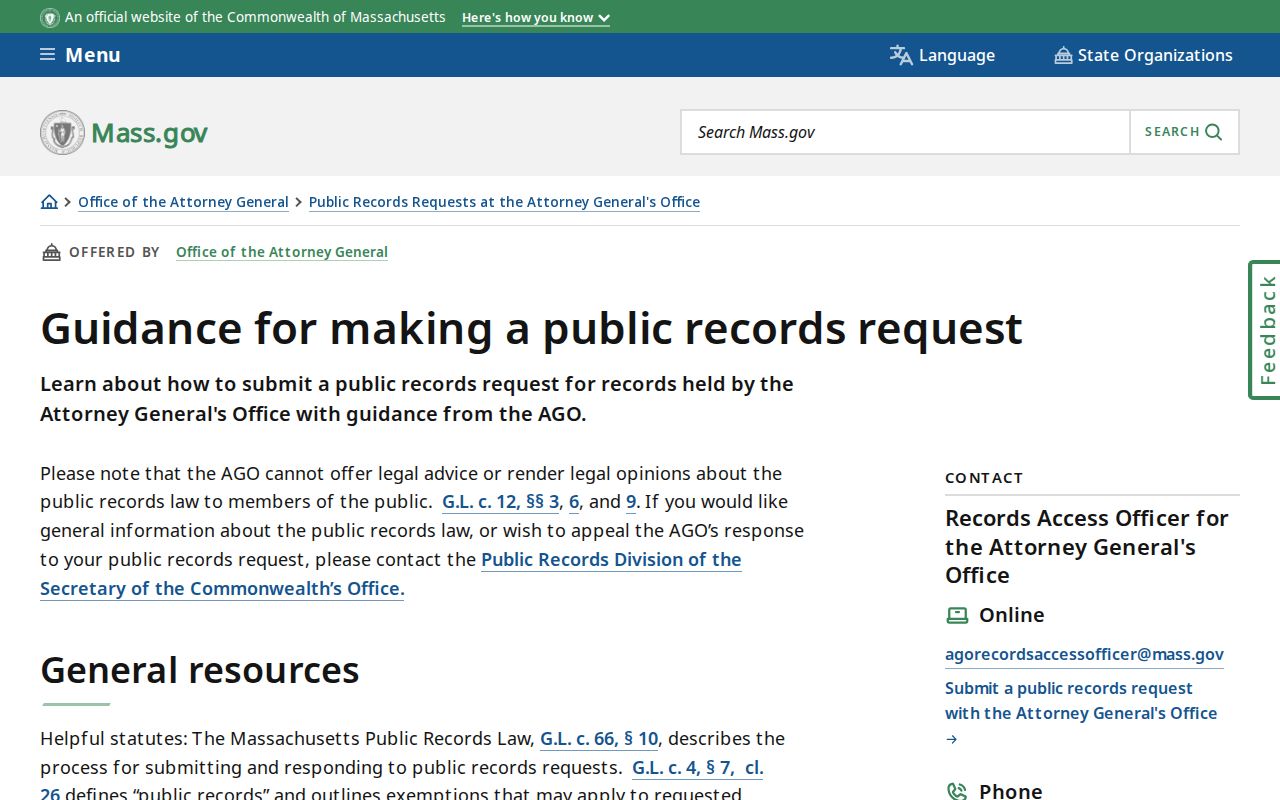
Ordinary black-and-white copies cap at five cents per page. Labor charges generally start after four hours. State rules govern both. Ask for a cost estimate and redactions whenever the request may be broad. Note: A focused request for an existing record usually earns a clearer answer than one asking an office to locate a person.
Randolph Records Through Time
Randolph's records are uneven across eras. The Norfolk land trail begins in 1793. A Registry transcription project eases the 1793-1900 cursive stretch. The scanned Registry index reaches to 1955, electronic registered-land recording began in 2017, and address-only searching grows dependable mainly for documents recorded from 2003 onward. Older work may need a legal description or plan.
Record continuity also depends on the institution. State Archives is still digitizing the recently transferred 3… 1931-1935 vital-record group. Once finished, that group bridges 1841-1930 FamilySearch images and the more recent registrar's custody. For historical Randolph names, save the source title, year, page, repository, and original spelling. That small trail makes later comparison possible when a directory, newspaper, deed, or library collection supplies only part of the answer.